Struggling with meal prep? Get my 20 Healthy Recipes for FREE!
Movement Over Exercise: Why You Don't Need a Gym to Be Healthy
Disclosure: This post contains affiliate links. If you click through and make a purchase, I may receive a commission at no additional cost to you. I only recommend products I truly love and use.
The science of everyday movement — and why a life built around walking, stretching and simply being active beats a gym membership you dread.
What if the healthiest thing you could do for your body had nothing to do with a gym, a workout plan, or a fitness tracker — and everything to do with how you move through an ordinary day?
Fitness culture has convinced us that health comes from structured exercise — specific workouts, specific intensities, specific times. And while intentional exercise absolutely has value, the research tells a more nuanced and frankly more liberating story: the way you move throughout your entire day matters as much as — sometimes more than — any single workout session.
For moms, beginners, and anyone who has ever felt intimidated by fitness culture, this is genuinely good news. Your body doesn't need a gym. It needs movement — consistent, varied, woven through your actual life. Let's look at the science, and then the practical steps to make it real.
Busting the myths that keep people stuck
Before we talk about what works, let's clear out the beliefs that stop women from starting in the first place:
Myth
You need at least 45–60 minutes of exercise for it to count.
Truth
10-minute bouts of movement accumulated across a day produce comparable health benefits to one continuous session. Three 10-minute walks is physiologically equivalent to one 30-minute walk for most health markers.
Myth
If you're not sweating and out of breath, it's not doing anything.
Truth
Low-intensity movement — walking, gentle stretching, household activity — delivers significant benefits for blood sugar regulation, cardiovascular health, and mental wellbeing. Intensity is one variable. Consistency is far more important.
Myth
You can cancel out sitting all day with one hour of exercise.
Truth
Prolonged sitting is an independent health risk — even in people who exercise regularly. Research shows that breaking up sedentary time every 30–60 minutes has health benefits that cannot be fully replicated by a single daily workout. Movement needs to be distributed throughout the day.
Myth
Without a structured plan and accountability, you won't make progress.
Truth
For most people — especially beginners — enjoyable, sustainable movement habits outperform structured programmes in long-term adherence. A walk you actually look forward to beats a workout you dread every time, measured over months and years.
What the research actually says?
The science on movement — as distinct from structured exercise — has shifted significantly in the last decade. Here are the numbers that matter:
22%
lower all-cause mortality from just 11 min of moderate activity daily
7,000
daily steps associated with significantly reduced cardiovascular risk
30%
reduction in depression symptoms from regular walking alone
A landmark study published in the British Journal of Sports Medicine found that just 11 minutes of moderate physical activity per day was associated with a significantly lower risk of cardiovascular disease, cancer, and early death. Not 60 minutes. Not five gym sessions. Eleven minutes.
The most consistent finding across decades of movement research is this: doing something — anything — is dramatically better than doing nothing. The biggest health gains come from moving people off the sedentary baseline, not from pushing active people to do more. If you are currently doing very little, a daily 15-minute walk will change your health more than any gym programme could if you never actually do it.
Understanding NEAT — your secret weapon
The concept
NEAT: Non-Exercise Activity Thermogenesis
NEAT is the energy your body burns through all physical activity that isn't deliberate exercise — walking to the kitchen, carrying groceries, playing with your kids, doing laundry, standing while you cook. Research from the Mayo Clinic shows that NEAT can vary by up to 2,000 calories per day between individuals with similar body compositions. The most active people aren't necessarily the ones who exercise more — they're often the ones who simply move more in daily life. For moms especially, NEAT is enormous and largely unrecognised as the significant physical activity it is.
This reframes everything. The mother who is on her feet all day — carrying a baby, doing school runs, tidying, cooking, walking to the park — is engaging in substantial physical activity that her fitness tracker may not fully capture and that she rarely credits herself for.
The goal, then, is not to add a gym session on top of an already full life. It is to make your existing movement more intentional, more varied, and more consistent — and then add structured movement when it genuinely fits, not out of guilt.
Types of movement that count — and what each one does
🚶
Walking
~200–300 kcal/hr
The single most evidence-backed form of movement for longevity, mental health, blood sugar control, and cardiovascular health. Free, accessible, zero equipment, and doable with a pram.
🧘
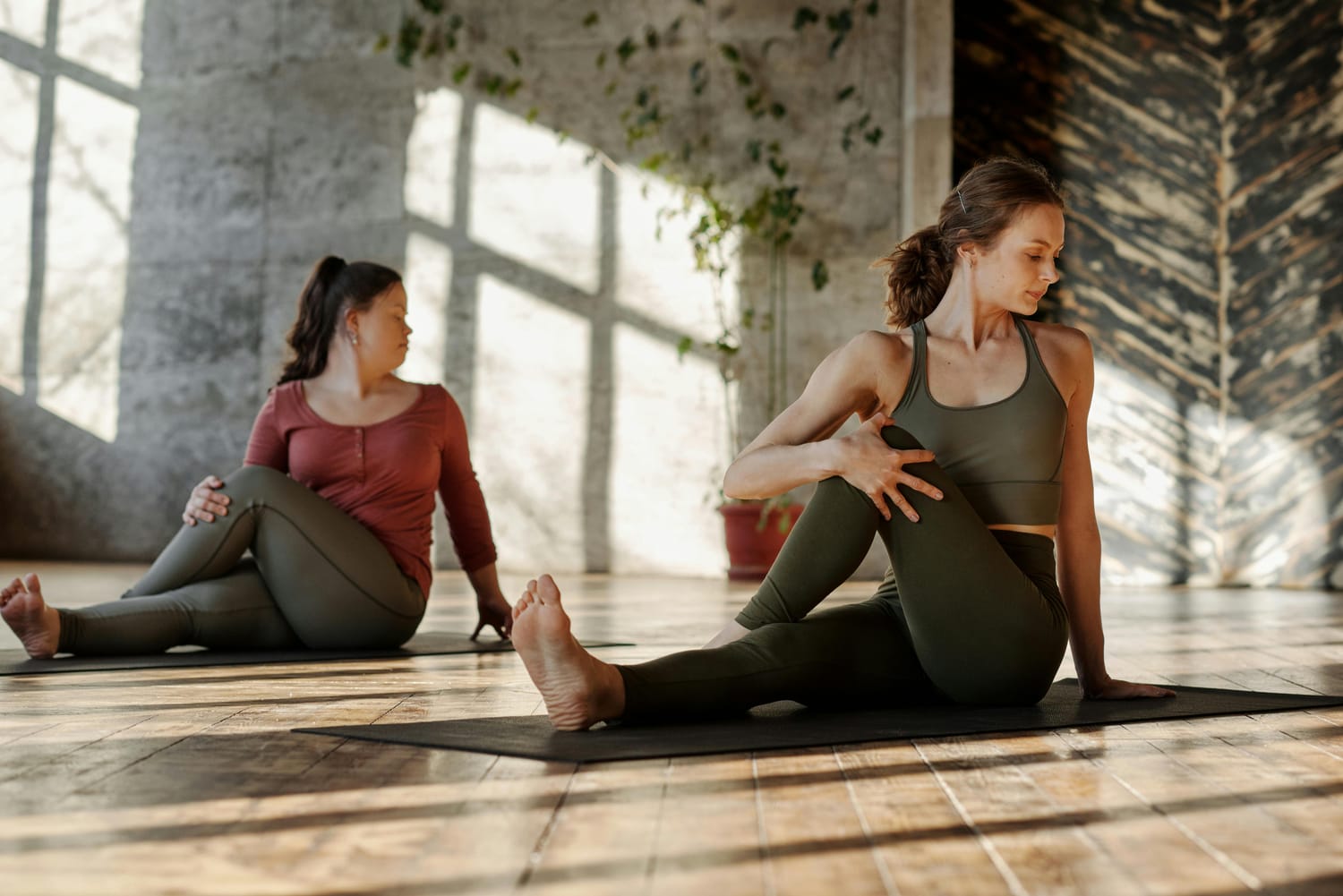
Stretching & yoga
~150–250 kcal/hr
Improves flexibility, reduces injury risk, lowers cortisol, and supports sleep. Particularly valuable for moms carrying and feeding babies, who develop significant tension in shoulders, neck, and hips.
💃
Dancing
~250–400 kcal/hr
Genuinely underrated as exercise. Improves cardiovascular fitness, coordination, and mood — and has the highest adherence of almost any physical activity because it doesn't feel like exercise.
🏊
Swimming
~400–600 kcal/hr
Low-impact, full-body, and profoundly restorative — particularly for postpartum bodies, joint pain, or anyone returning from injury. One of the gentlest ways to build cardiovascular fitness.
🚲
Cycling
~300–500 kcal/hr
Transport that counts as exercise — an ideal combination for busy moms. Gentle on joints, builds leg strength, and accessible as either outdoor cycling or a stationary bike at home.
🏡
Active household tasks
~150–250 kcal/hr
Vacuuming, mopping, gardening, carrying laundry — these are real physical activity. Done with intention and energy, they contribute meaningfully to your daily movement total.
How to build more movement into an ordinary day?
The most sustainable movement habits are ones that attach to things you already do — not ones that require carving out extra time from an already full schedule. Here are practical ideas that work specifically for moms:
Walk to school. If you're within 20 minutes, walk instead of drive three days a week. Over a school term, this adds up to hours of accumulated movement.
10-minute morning stretch. Before the household wakes up or during the first nap. Yoga with Adriene on YouTube is free and has beginner sessions from 10 minutes.
Stand while on the phone. Every call is an opportunity to stand, pace, or do gentle calf raises. Tiny — but it accumulates.
Dance in the kitchen. One song while cooking dinner is 3–4 minutes of genuine cardiovascular activity and almost always makes the cooking more enjoyable too.
Pram walk after the morning feed. A 20-minute walk with the pram is movement for you, fresh air for baby, and often helps settle a fussy newborn. Make it the default, not the exception.
Body-weight moves during TV time. Three sets of squats or glute bridges during one episode of whatever you're watching costs no extra time and adds up to a meaningful training load over a week.
Get off the bus one stop early. Or park further away. Manufactured inconvenience that becomes effortless habit within two weeks.
Play actively with your kids. Chasing, jumping, climbing at the park — this is real movement. Stop watching from the bench and join in when you can. Your kids will love it and so will your body.
The 2-minute rule: Any movement that takes 2 minutes or less — a short stretch, a lap of the garden, a set of squats while the kettle boils — is always worth doing. The habit of responding to idle moments with micro-movement is one of the most powerful long-term health behaviours you can build.
A realistic movement week — no gym required
Here is what a genuinely achievable, health-supporting movement week looks like for a busy mom. No gym membership, no special equipment, no babysitter required:
As a busy mom, the idea of "exercise" often feels like another item on an already overflowing to-do list. The thought of carving out an hour for the gym, finding a babysitter, or investing in expensive equipment can be enough to make you throw in the towel before you even start. But what if I told you that you don't need any of that to be healthy, strong, and energized? What if movement could simply be woven into the beautiful, chaotic tapestry of your daily life?
This isn't about intense workouts; it's about reclaiming natural movement and understanding that every step, every lift, every stretch contributes to your overall well-being. Here’s what a genuinely achievable, health-supporting movement week looks like for a busy mom – no gym membership, no special equipment, no babysitter required.
The Morning Micro-Movement Ritual: Waking Up Your Body (5-10 minutes)
Before the kids are up, or while the coffee brews, seize those precious few minutes. Instead of scrolling, try:
•The "Spine Wake-Up": Start with gentle cat-cow stretches on the floor, moving into a few downward dogs. This mobilizes your spine and stretches your hamstrings and shoulders, preparing you for the day's lifting and bending.
•Dynamic Stretches: Arm circles, leg swings, and torso twists. These aren't static holds but fluid movements that increase blood flow and flexibility.
•Deep Breathing: Spend 2-3 minutes focusing on deep belly breaths. This calms the nervous system and oxygenates your body, setting a positive tone.
Why it works: These micro-movements signal to your body that it's time to wake up, improving circulation and reducing morning stiffness without demanding a significant time commitment.
Play-Based Fitness: Moving With Your Kids (30-60 minutes, cumulative)
Your children are natural movers. Join them! This isn't just about bonding; it's about leveraging their energy for your own fitness.
•Park Power-Up: Instead of sitting on the bench, chase them on the playground. Climb the ladder, swing from the monkey bars (if safe and able), do squats while pushing them on the swing, or race them across the field. Even 15 minutes of active play can be a fantastic cardio burst.
•Dance Party Detox: Put on your kids' favorite music (or yours!) and have an impromptu dance party in the living room. Let loose, jump, spin, and laugh. It's incredible cardio and a huge mood booster.
•Backyard Adventures: Create an obstacle course, play tag, or simply run around. Lifting kids, carrying them, and getting down on their level for play are all functional movements that build strength and endurance.
Why it works: You're getting active without needing separate time. The movements are varied, engaging, and often mimic functional strength training (lifting, carrying, squatting, bending) that directly translates to daily mom life.
Household Ergonomics: Chores as Functional Strength Training (15-30 minutes, cumulative)
Your home is your gym. Every chore is an opportunity for movement. Think consciously about how you move.
•Laundry Lifts: Instead of bending from your back, squat down to pick up laundry baskets. Engage your core as you carry them. Reach for high shelves to put away clothes, stretching your arms and shoulders.
•Cleaning Calisthenics: When vacuuming, use long, sweeping motions, engaging your core and legs. When scrubbing, put your whole body into it. Lunges while wiping down low surfaces, calf raises while waiting for water to boil – every little bit adds up.
•Gardening & Yard Work: Digging, raking, planting, and carrying bags of soil are full-body workouts. These movements build core strength, grip strength, and endurance.
Why it works: You're already doing these tasks. By being mindful of your posture and engaging your muscles, you transform mundane chores into effective, functional strength training, building resilience for daily demands.
The "Mom-Reset": Evening Mobility & Stress Relief (5-10 minutes)
After the kids are in bed, take a few minutes to unwind and release tension. This is crucial for recovery and mental well-being.
•Gentle Yoga Stretches: Focus on hip openers (pigeon pose, butterfly stretch) and chest openers (gentle backbends over a pillow). These areas often get tight from carrying kids and hunching over.
•Foam Rolling (Optional): If you have a foam roller, spend 5 minutes rolling out your back, glutes, and hamstrings. It's like a mini-massage that releases muscle knots.
•Legs Up the Wall: Lie on your back and put your legs straight up against a wall. This simple inversion helps reduce swelling in your legs and calms your nervous system.
•Mindful Breathing: End with a few minutes of quiet, intentional breathing to transition from the day's demands to restful sleep.
Why it works: This dedicated time helps to undo the physical and mental stresses of the day, improving flexibility, reducing muscle soreness, and promoting better sleep quality.
The Weekend Adventure: Family Movement (60+ minutes)
Weekends offer more time for sustained movement, often as a family.
•Nature Walks/Hikes: Explore local trails, parks, or even just a new neighborhood. The varied terrain engages different muscles, and fresh air is a natural mood booster.
•Bike Rides: A family bike ride is a fantastic way to get cardio and explore your surroundings.
•Swimming: If you have access to a pool or beach, swimming is a full-body, low-impact workout that's fun for everyone.
Why it works: Longer, enjoyable movement sessions on the weekend help build endurance and provide a mental break, reinforcing the idea that movement is a joyful part of life, not a chore.
Your Movement Mindset Shift
The key to "Movement Over Exercise" is a mindset shift. It's about seeing every opportunity to move as a win, rather than waiting for the perfect, uninterrupted hour. It's about ditching the guilt and embracing the reality of your life. Your body is designed to move, and by integrating these simple, achievable strategies, you're not just being a healthy mom; you're modeling a healthy, active lifestyle for your children. No gym required, just you, your life, and the power of consistent, intentional movement.
Total structured movement across this week: approximately 3 hours. Cost: zero. Gym visits required: none. And built into a real family life, not around it.
Barrier
"I don't have time — my day is already completely full."
Reframe
You don't need to find time — you need to replace time. Swap a 15-minute scroll on your phone for a walk. The time is there; it's about redirecting it.
Barrier
"I'm too tired. By the end of the day I have nothing left."
Reframe
Movement — particularly a short walk — reliably increases energy levels rather than depleting them. The paradox is real: the times you feel least like moving are often when it helps the most.
Barrier
"I've tried before and always stop after a few weeks."
Reframe
That means your previous approach was too ambitious or didn't fit your actual life — not that you lack willpower. Start smaller than feels worthwhile and build from there. A 10-minute walk every day beats a 60-minute workout that happens twice before you quit.
Barrier
"I feel self-conscious about how I look or how unfit I am."
Reframe
Movement outside a gym — walking, home exercise, swimming — removes the social environment entirely. You can start exactly where you are, wearing whatever you have, with no one watching. Fitness is built in private and revealed in public — not the other way round.
Movement is not a privilege reserved for people with gym memberships, free mornings, and childcare. It is something your body was designed for — and it responds to even the smallest, most consistent doses of it. A daily walk. A morning stretch. Dancing in the kitchen. Chasing your children at the park. These are not consolation prizes for people who "can't" do real exercise. They are real exercise — and for many women, they are the foundation of the healthiest life they will ever build. Start where you are. Move a little more than yesterday. That is genuinely enough.
Hi! I’m Anna. I’m a proud mom of two beautiful girls and your guide on
this exciting journey
to a healthier, happier life. Everything I
publish here at here is designed
to inspire you to live your best life.
My mission is simple:
to empower women and busy
moms with practical tips on weight
loss, easy recipes, and the motivation
needed to balance a healthy lifestyle
with the joys (and chaos!)
of motherhood.
Written by: Anna Smith Johnson


Subscribe to our email list and unlock 20 FREE healthy recipes .