Struggling with meal prep? Get my 20 Healthy Recipes for Mom & Baby for FREE!
The Ultimate Guide to Electrolytes: Why They Are the \"Spark Plugs\" of Your Body and How to Master Your Intake
Disclosure: This post contains affiliate links. If you click through and make a purchase, I may receive a commission at no additional cost to you. I only recommend products I truly love and use.
In the world of health and wellness, we often hear about macronutrients like proteins and fats, or popular vitamins like Vitamin C and D. But there is a silent category of minerals that literally keeps your heart beating and your muscles moving:
Electrolytes
If you’ve ever felt "brain fog" after a workout, experienced a sudden leg cramp in the middle of the night, or felt utterly depleted despite drinking a gallon of water, you likely have an electrolyte problem, not a hydration problem.
What Are Electrolytes?
At their simplest level, electrolytes are minerals that carry an electrical charge when dissolved in water (such as your blood or cellular fluid). Your body is essentially a high-tech bio-electrical machine. Your nervous system sends signals to your muscles and organs using electricity.
Without electrolytes, these signals simply don't get through.
There are seven primary electrolytes that your body monitors with extreme precision:
Sodium: Controls blood pressure and blood volume. It is the primary "extracellular" ion.
Potassium: The "intracellular" partner to sodium. It prevents cramps and supports heart rhythm.
Magnesium: Involved in over 300 biochemical reactions, including DNA repair and muscle relaxation.
Calcium: Beyond bones, it is vital for blood clotting and nerve transmission.
Chloride: Helps maintain proper blood volume and pH balance.
Phosphate: Essential for energy production (ATP).
Bicarbonate: Maintains the critical acid-base balance in your blood.
Why Are Electrolytes Essential for Your Health?
Most people think electrolytes are just for marathon runners. In reality, they are essential for every human being, every single second.
1. Optimal Brain Function
Your brain cells (neurons) communicate via electrical impulses. When your sodium or magnesium levels drop, you experience "brain fog," headaches, and irritability. For moms managing a household, electrolyte balance is often the difference between feeling "on top of things" and feeling completely overwhelmed.
2. Muscle Contraction and Relaxation
Ever had a "charley horse" cramp? That is a localized electrolyte failure. Potassium and calcium allow muscle fibers to slide together (contract), while magnesium allows them to slide apart (relax).
3. Deep Hydration
Here is a secret: Water alone does not hydrate you. In fact, if you drink too much plain water without electrolytes, you can actually flush out your existing minerals, leading to a dangerous condition called hyponatremia. Electrolytes act like magnets, pulling water into the cells where it is actually needed.
Daily Requirements
(Men, Women, and Children)
The US National Academies of Sciences, Engineering, and Medicine provide general guidelines, but remember: if you are active, pregnant, or live in a hot climate, these needs go up.
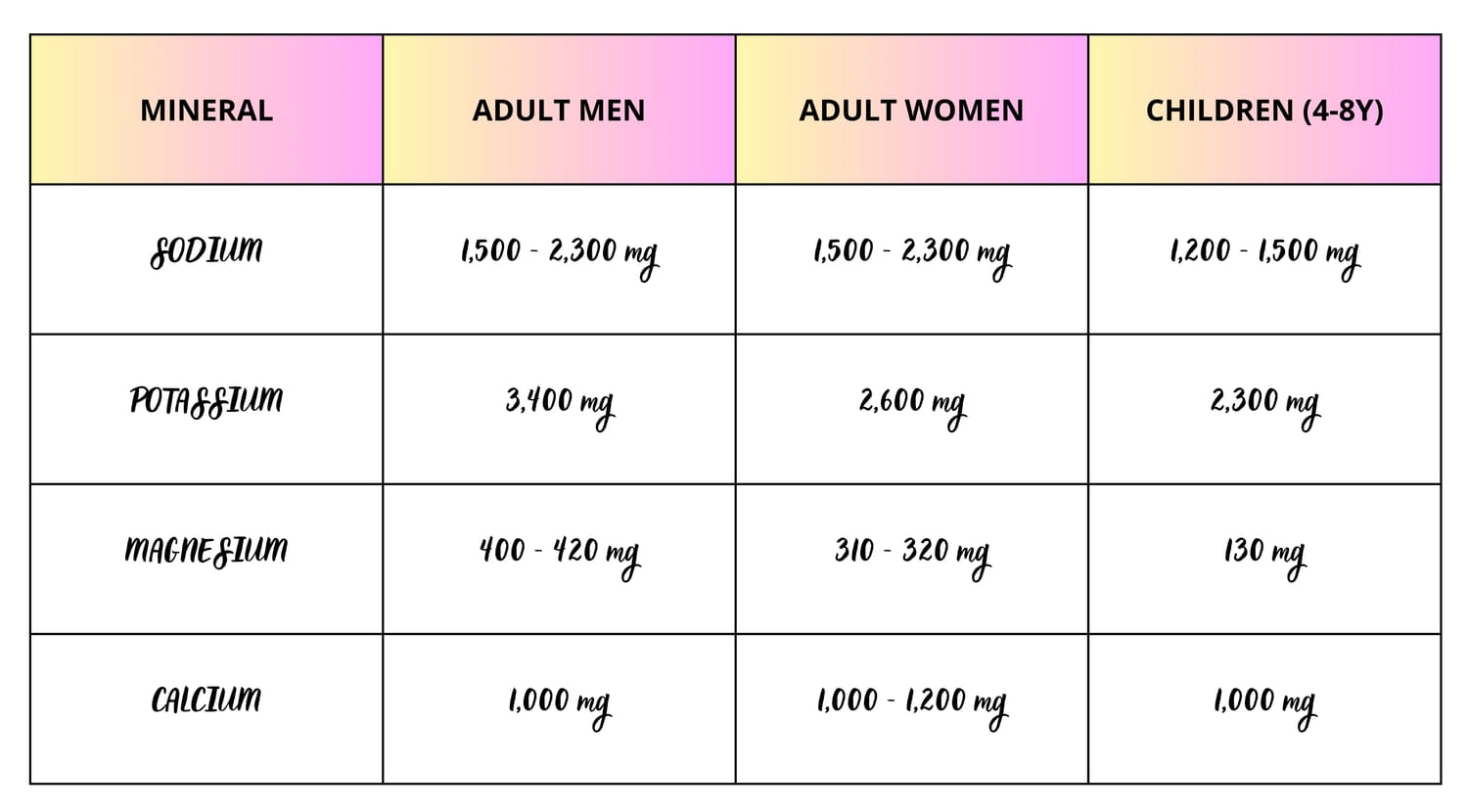
A Note for Moms: Children lose electrolytes rapidly through play and fever. Ensuring they have a "mineral-rich" diet is often more important than forcing them to drink plain water.
Nature’s Electrolyte Sources
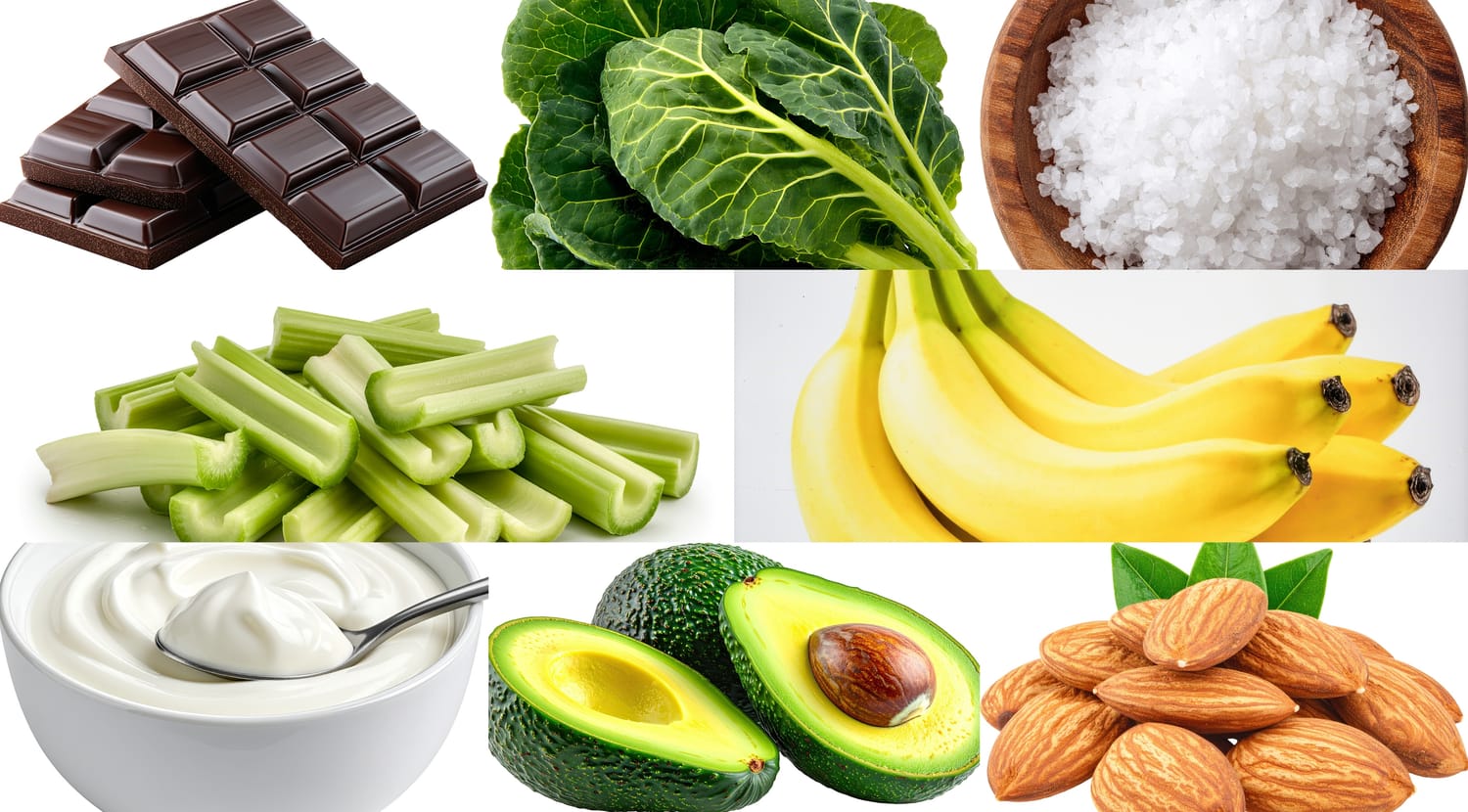
You don't need "blue sports drinks" filled with neon dyes and sugar to get your minerals. Nature has already packaged them perfectly.
Potassium: Bananas (the classic), Avocados (even better!), Coconut water, and Spinach.
Magnesium: Pumpkin seeds (pepitas), Dark Chocolate (70%+), Cashews, and Black beans.
Sodium: High-quality Sea Salt (Celtic or Himalayan), Celery, and Beets.
Calcium: Greek yogurt, Almonds, Kale, and Sardines.
My Recommendation: The "Emergency" Electrolyte Stash
While I always advocate for a "food-first" approach, let’s be real: as busy moms, we don't always have an avocado and a bunch of spinach ready when a dehydration headache hits. Whether it’s a long hike, a stomach bug going through the house, or a high-intensity workout, I always keep high-quality Electrolyte Powder Packets in my purse.
I look for brands that have zero sugar, no artificial dyes (no Red 40!), and at least 500mg of sodium. These are "grab-and-go" lifesavers for the whole family.
3 DIY Electrolyte Drink Recipes (Make These at Home!)
1. The "Morning Glow" Refresher
Best for: Starting your day with mental clarity.
1 cup Coconut Water (Natural potassium)
1 cup Filtered Water
Juice of 1/2 Lime (Vitamin C)
1/4 tsp Pink Himalayan Salt (Trace minerals)
1 tsp Raw Honey (Optional for energy)
2. The "Post-Workout" Watermelon Blast
Best for: Recovery and reducing muscle soreness.
2 cups Fresh Watermelon (Watermelon contains L-citrulline, which aids muscle recovery)
1 cup Water
Juice of 1/2 Lemon
1/4 tsp Sea Salt
Method: Blend and serve over ice.
3. The "Kids' Berry Hydrator"
Best for: Sick days or hot summer afternoons.
1 cup Hibiscus or Berry Tea (brewed and cooled)
1/2 cup Pomegranate juice (High antioxidants)
1/4 tsp Celtic Sea Salt
1 tsp Magnesium Citrate powder (optional for a "calm" effect)
Electrolytes for Specific Life Stages
For the Pregnant or Nursing Mom
During pregnancy, your blood volume increases by nearly 50%. This creates a massive demand for sodium and magnesium. Many "pregnancy leg cramps" are simply a cry for more minerals. Always consult your midwife, but increasing your salt and magnesium intake is often the "missing piece" for a comfortable pregnancy.
For the Active Child
Kids regulate temperature less efficiently than adults. By the time they say "I'm thirsty," they are already slightly dehydrated. Giving them an electrolyte-rich "slushie" (Recipe #3 frozen) is a great way to protect their energy.
Conclusion – Don't Just Hydrate, Mineralize
Hydration is not a volume game; it is a balance game. If you want to rise above the fatigue and brain fog that characterizes modern life, you must prioritize your electrolytes.
Start small: Add a pinch of sea salt to your morning water. Eat an avocado. Make a DIY drink for your kids. When you fix your minerals, you fix your energy.
Rise up, Mineralize, and Thrive.
Hi! I’m Anna. I’m a proud mom of two beautiful girls and your guide on
this exciting journey
to a healthier, happier life. Everything I
publish here at here is designed
to inspire you to live your best life.
My mission is simple:
to empower women and busy
moms with practical tips on weight
loss, easy recipes, and the motivation
needed to balance a healthy lifestyle
with the joys (and chaos!)
of motherhood.
Written by: Anna Smith Johnson



Subscribe to our email list and unlock 20 FREE healthy recipes for mom & baby – designed to make mealtime easier and healthier.