Struggling with meal prep? Get my 20 Healthy Recipes for Mom & Baby for FREE!
Training at Home vs the Gym — Which is Better for Moms?
Disclosure: This post contains affiliate links. If you click through and make a purchase, I may receive a commission at no additional cost to you. I only recommend products I truly love and use.
You've decided you want to start moving your body again. That's huge. But now comes the next question — and it's one that stops a lot of moms before they even begin: do I work out at home, or do I join a gym?
The internet will tell you the gym is the only way to get real results. The same internet will also sell you a home workout programme promising you never need to leave your living room. Both are trying to make money. Neither is actually answering your question.
The honest answer is that neither option is universally better — but one of them is almost certainly better for you, right now, at this specific stage of your life. This guide will help you figure out which one that is, without guilt, without pressure, and without pretending that all moms have the same life.
The real pros and cons — for moms specifically
Most comparisons of home versus gym training talk about equipment and cost. Those things matter, but they're not the whole picture for a mom — especially one who is new to exercise or returning after pregnancy. Here's an honest breakdown:
Training at home
No commute, no childcare needed
Advantages
Zero travel time — workout starts when you're ready
Baby or toddler can be nearby or involved
No membership cost — free or low-cost apps work well
Easier to stay consistent around nap schedules
No self-consciousness about postpartum body changes
Can pause and resume around feeds and wake windows
Challenges
Home distractions are constant and real
Limited equipment means less variety over time
No external accountability or community
Harder to mentally "switch off" from mum mode
Training at the gym
Dedicated space, more equipment
Advantages
A defined space that signals "this is my time"
Access to weights, machines, classes, and pools
Social connection — other women, instructors, community
Many gyms offer crèche or on-site childcare
Leaving the house creates a mental shift that helps focus
Group classes provide structure and motivation
Challenges
Monthly cost adds up — plus childcare if needed
Travel time eats into already limited free time
Crèche hours may not match your schedule
Can feel intimidating for beginners or postpartum bodies
What postpartum bodies specifically need
If you've had a baby in the last one to two years — whether that was six weeks ago or eighteen months ago — your body has specific needs that most generic fitness advice ignores completely. Before the home vs gym question, these considerations matter more:
Postpartum exercise essentials
Pelvic floor first, always - Whether you had a vaginal birth or C-section, your pelvic floor needs rehabilitation before high-impact exercise. Leaking, pressure, or heaviness during exercise are signs to slow down, not push through. See a pelvic floor physiotherapist if you can — it's one of the best investments you can make in your long-term health.
Check for diastasis recti - This separation of the abdominal muscles affects the majority of postpartum women to some degree. Certain exercises — especially crunches and sit-ups — can worsen it. Both home workouts and gyms can accommodate this, but you need to know what to avoid first.
Start with walking - Before any structured workout program, daily walking is the single most effective thing a new or returning mom can do. It rebuilds cardiovascular fitness, supports mental health, is completely free, and requires no childcare if you use a pram.
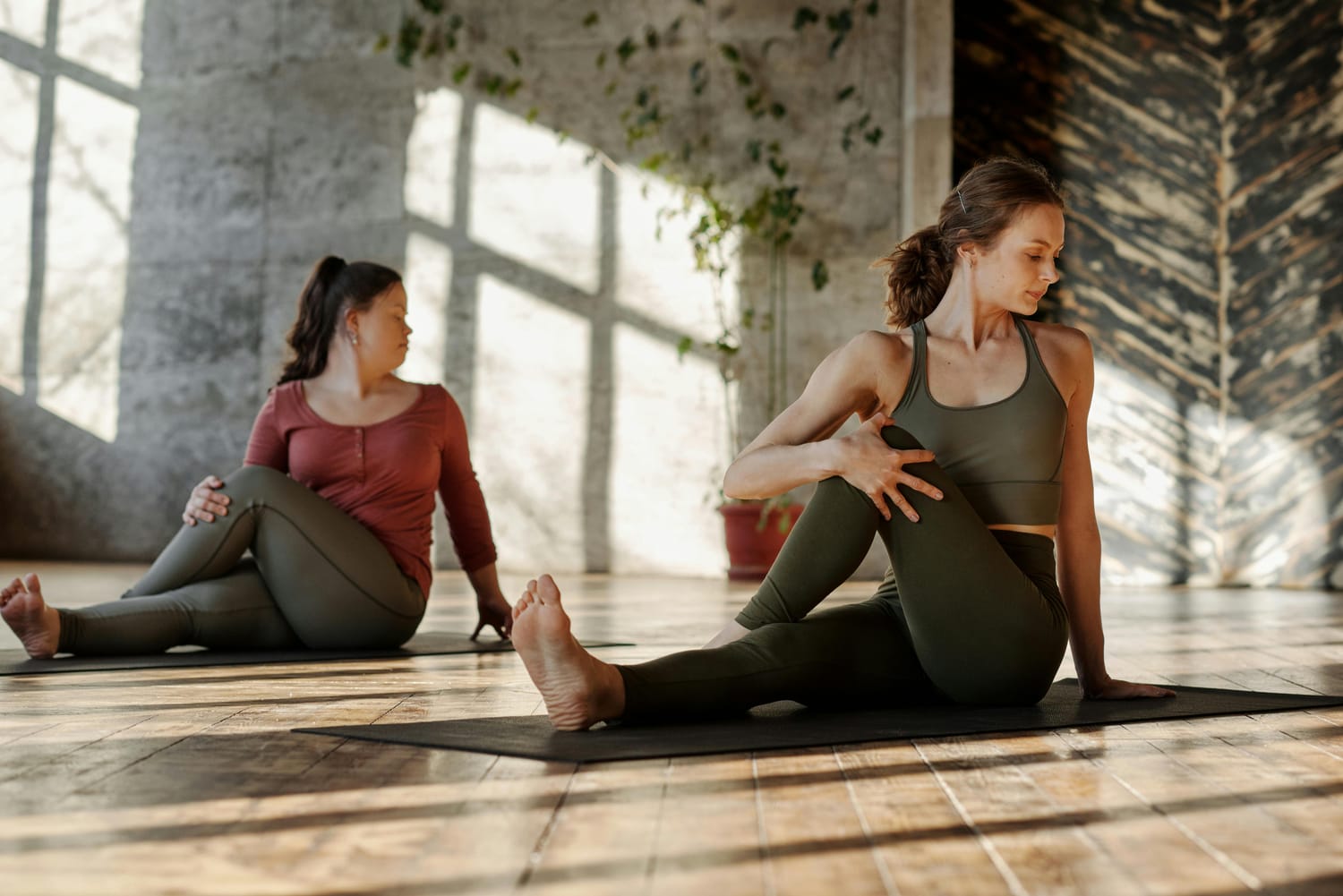
Low-impact does not mean low-value - Yoga, Pilates, bodyweight strength training, and swimming are all highly effective for rebuilding postpartum fitness. You do not need to run, jump, or lift heavy to make real progress at this stage.
Rest is training too - Sleep deprivation is real in the early years of motherhood. Overtraining when you're already sleep-deprived increases cortisol, disrupts recovery, and often leads to burnout or injury. Two to three 20–30 minute sessions per week is a genuinely excellent starting point.
Important: Always get clearance from your GP or midwife before returning to exercise after birth. The traditional "6-week check" is a minimum, not a full green light — especially for C-section recovery or those with pelvic floor symptoms.
A simple decision framework: 5 questions
Instead of following someone else's recommendation, answer these five questions honestly. Your answers will point clearly toward the right option for you right now — and "right now" is all that matters. You can always change later.
Do you have reliable childcare during the hours you'd go to the gym?
If yes — gym is a genuine option. If no, or if childcare is inconsistent and stressful — home training removes the logistical barrier entirely and makes consistency far more likely.
Do you find it hard to focus at home with the baby or kids around?
Some moms thrive with home workouts during nap time. Others find the mental shift impossible — they start a workout and end up doing laundry. Honest self-awareness here saves a lot of wasted gym memberships and abandoned home plans.
Do you feel motivated by other people, classes, or community?
If you've historically been more consistent when you have a class booked, a friend to meet, or a coach watching — the gym environment will likely serve you better. If you prefer independence and privacy, home wins.
What does your budget look like realistically?
A gym membership plus childcare can cost $80–$150+ per month. That's real money for a family. Home training with free YouTube content or a low-cost app can deliver excellent results at a fraction of the price. Budget reality matters — a plan you can't afford isn't sustainable.
Which option removes the most friction between you and actually showing up?
This is the most important question of all. The best workout is the one you actually do. A ten-minute home session that happens three times a week beats a perfectly planned gym program you attend once and then abandon. Choose the path of least resistance — especially in the beginning.
Starter plans for Home Workout and Gym Workout
Whichever direction you choose, here is a realistic, beginner-friendly starting point. Both are designed for moms returning to exercise, with postpartum-safe movements and no equipment required for the home version.
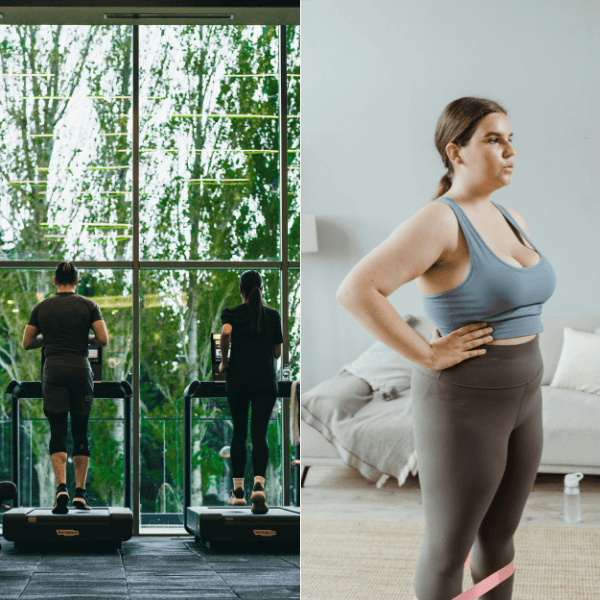
Home starter plan
3x per week · 20–25 min each
5 min gentle warm-up walk or marching on the spot
Bodyweight squats — 3 sets of 10
Wall push-ups — 3 sets of 8
Glute bridges — 3 sets of 12
Bird-dog — 3 sets of 8 each side
Standing side leg raises — 2 sets of 10
5 min cool-down stretching and deep breathing
Free resource: Yoga on YouTube
Gym starter plan
2–3x per week · 30–40 min each
10 min treadmill walk at comfortable pace
Leg press machine — 3 sets of 10 (light weight)
Seated row machine — 3 sets of 10
Assisted squat or Smith machine squat — 3 sets of 8
Cable or band glute kickback — 3 sets of 12
Ask a trainer for a free induction session — most gyms offer this
Consider a beginner Pilates or yoga class first
Important first step for both: Before starting either plan, spend two weeks simply walking for 20–30 minutes daily. Walking is underrated as a foundational fitness tool — it builds the habit of movement and gently prepares your body for more structured exercise.
What about doing both?
Many moms find that the most sustainable long-term approach is a hybrid — home training most of the week, with one gym session or class as a weekly treat that also gives them an hour to themselves. This approach offers the flexibility of home training with the community and motivation boost of occasional gym visits.
If this appeals to you, start with home training for the first four to six weeks to build your baseline and establish the habit. Then add a gym session once you feel confident and consistent. Building gradually like this is far more effective than trying to do everything at once and burning out.
The honest truth about consistency
The gym versus home debate ultimately doesn't matter as much as this: the moms who get results are the ones who show up regularly, not the ones who chose the "right" option. A 20-minute home workout three times a week, done consistently for six months, will transform how you feel. An expensive gym membership you use twice a month will not. Choose the environment where you are most likely to keep showing up — and then protect that time like it matters. Because it does.
Start small. Be consistent. Be patient with your body — it grew a human, after all. And remember that movement is not punishment. It's one of the kindest things you can do for yourself.
Hi! I’m Anna. I’m a proud mom of two beautiful girls and your guide on
this exciting journey
to a healthier, happier life. Everything I
publish here at here is designed
to inspire you to live your best life.
My mission is simple:
to empower women and busy
moms with practical tips on weight
loss, easy recipes, and the motivation
needed to balance a healthy lifestyle
with the joys (and chaos!)
of motherhood.
Written by: Anna Smith Johnson


Subscribe to our email list and unlock 20 FREE healthy recipes for mom & baby – designed to make mealtime easier and healthier.